Why More Women Are Turning to Energy Healing for Calm, Balance and Self-Care
Women’s wellness has never been more important or more complicated. Between careers, caring responsibilities, relationships, social pressures and the endless quest for balance, many women are looking beyond traditional self-care advice in search of something that helps them feel genuinely restored. Enter Reiki.
Once considered a niche complementary therapy, Reiki is increasingly finding its place alongside yoga classes, mindfulness apps and massage treatments as part of a modern wellbeing toolkit. Practised in hospitals, wellness centres and private clinics around the world, Reiki offers a gentle, non-invasive approach to relaxation that many women say helps them feel calmer, more grounded and better equipped to navigate everyday life.
But what exactly is Reiki, and why are so many women embracing it?
So, What Is Reiki?
Reiki (pronounced ray-key) is a Japanese energy healing practice developed in the early 20th century. The word itself roughly translates to “universal life energy”.
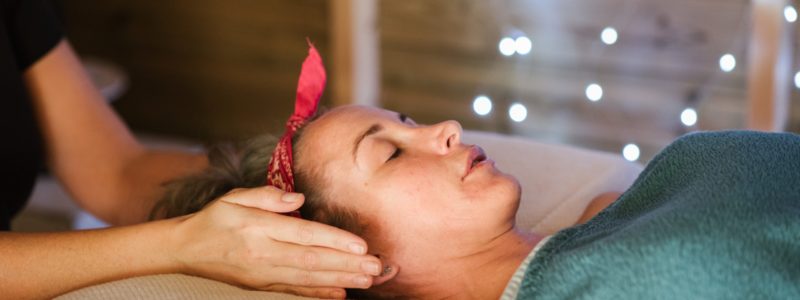
During a Reiki session, a practitioner places their hands lightly on or just above the body in a series of positions. The aim is not to manipulate muscles or joints, but to support the body’s natural ability to relax and restore balance.
Many recipients describe the experience as deeply calming. Some report sensations of warmth, tingling or gentle waves of relaxation, while others simply enjoy an hour of uninterrupted stillness, something many busy women rarely allow themselves.
Importantly, Reiki is not intended to replace medical treatment or professional healthcare. Instead, it is often used as a complementary practice that supports overall wellbeing.
Why Reiki Resonates With Women
Modern life places unique demands on women. According to numerous studies, women are more likely than men to experience chronic stress, anxiety and emotional exhaustion, particularly when juggling multiple roles and responsibilities.
Reiki offers something increasingly rare: permission to stop.
Unlike many wellness trends that focus on improvement, optimisation or achievement, Reiki asks nothing of the recipient.
There are no poses to master, goals to hit or performance metrics to track.
For women who spend much of their lives caring for others, that can be surprisingly powerful.
Many clients seek Reiki during periods of transition, including:
Career changes
Pregnancy and motherhood
Menopause
Bereavement or relationship breakdown
Recovery from illness
Times of heightened stress or burnout
While individual experiences vary, many women report leaving sessions feeling calmer, clearer and more emotionally balanced.
The Science Question
Any discussion of Reiki inevitably raises the question: does it work?
Research into Reiki is still evolving, and scientists continue to debate the mechanisms behind its effects.
However, several studies suggest Reiki may help promote relaxation and reduce feelings of stress and anxiety in some individuals.
What is clear is that the relaxation response itself has measurable benefits. When the body moves out of a heightened stress state, heart rate can slow, breathing becomes deeper and muscles begin to release tension.
Whether someone views Reiki through a spiritual lens, an energetic framework or simply as a structured relaxation practice, the outcome many women seek is often the same: feeling better.
And in a culture that often glorifies busyness, creating space for rest is not something to dismiss.
The Rise of Remote Reiki
Perhaps one of the most fascinating developments in recent years is the growing popularity of distance Reiki.
Yes, Reiki can be offered remotely.
While this may sound unusual to those unfamiliar with the practice, remote Reiki has been part of traditional Reiki training for decades.
During a distance session, the practitioner works with the recipient at an agreed time, while both remain in separate locations and with today’s technology it has become easier to bridge the gap using online video tools such as zoom.
The client may relax at home, listen to music, meditate or simply go about their day.
Many practitioners report that interest in remote Reiki accelerated dramatically during the pandemic, when in-person treatments became difficult or impossible.
Since then, many women have continued to choose remote sessions because of their convenience.
For mothers, carers, busy professionals and women living in rural areas, the ability to receive a treatment without travelling can be a significant advantage.
Remote Reiki also appeals to those who may feel more comfortable relaxing in their own familiar environment rather than visiting a clinic or treatment room.
What Happens During a Session?
Whether in person or remotely, Reiki sessions are generally simple and accessible.
An in-person treatment typically lasts between 45 and 60 minutes.
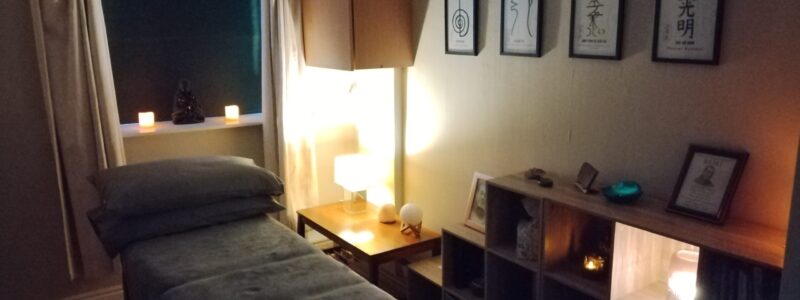
The client remains fully clothed and lies on a treatment couch or sits comfortably in a chair.
A remote session often begins with a brief conversation, followed by a designated treatment period.
Afterwards, practitioner and client may discuss the experience and any observations.
No special beliefs are required.
One of Reiki’s strengths is its simplicity. Recipients do not need prior experience with meditation, spirituality or alternative therapies to benefit from taking time out for themselves.
A Different Kind of Self-Care
The wellness industry often tells women to do more: more exercise, more supplements, more productivity hacks, more self-improvement.
Reiki offers something refreshingly different.
Its appeal lies not in adding another task to an already overwhelming to-do list, but in creating space to pause, reconnect and listen inwardly.
For some women, Reiki becomes an occasional treat.
For others, it develops into a regular part of their wellbeing routine, sitting comfortably alongside conventional healthcare, exercise, nutrition and mindfulness practices.
The growing popularity of both in-person and remote Reiki reflects a wider shift in how women think about health not simply as the absence of illness, but as a state of physical, emotional and mental balance.
And perhaps that’s why Reiki continues to attract attention.
In a world that constantly demands our energy, practices that help us restore it may be more valuable than ever.